Title sequences research
Films use often use title sequences as a method to present their title and key production and cast members utilizing conceptual visuals and sounds. It allows the viewer to identify the film and who it was produced by, as well as acting as a signal to show that the film has started. Over the years produces have experimented with the opening title sequences, and many films have used unusual title sequences since the 1930's.
A trend that films have commonly used for their title sequences since the 1950's, is to create their title sequences to showcase contemporary design and illustration. Title sequences created by Saul Bass and Maurice Binder are among the best examples of this. Their ideas on title sequences as well as many others, inspired many imitators both in the cinema and on television to this day.
Tuesday, January 29, 2013

Opening Scenes
The opening scenes of films are important and usually contribute to the success of the film. They provide the setting and a sample of whats to come. Many people use the opening scenes to judge if the rest of the film is "good" or "bad", therefore it is important that they are create the opening scenes well to prevent them from discouraging their audience from watching the film. The correct use of action, mystery and suspense can grip the audience, in turn making them want to keep watching.
Friday, January 25, 2013
The Montage Theory
Lev Kuleshov, first to theorize about the young medium of the cinema in 1920's
The montage editing contains different images, edited together. The images don't provide a sense of the narrative moving forward however are still meaningful. The rapid cuts force the viewer to consider connections between, images being shown. There may have no obvious connections, or might be deliberately unconnected. The scenes reflect chaos, tension, disturbance, characters state of mind and they may have overall thematic or visual connection.
Above is a scene taken from the film "Rocky IV" where the montage theory has been used well. It allows the audience to see what has happened in the film, in a short more thrilling manner. We see the hard work and development of the star "Rocky" and his future opponent, they had to endure. This builds suspense leading to the main "fight" of the film.
Above is a scene taken from the film "Rocky IV" where the montage theory has been used well. It allows the audience to see what has happened in the film, in a short more thrilling manner. We see the hard work and development of the star "Rocky" and his future opponent, they had to endure. This builds suspense leading to the main "fight" of the film.
Monday, January 21, 2013
Summary of film language
If a thriller successively applies; camera techniques(shot angles, Shot sizes, Camera and lens movements, Sound, (non diegetic, diegetic, sound effects etc.)editing (Fast editing etc.)and mise-en-scene (costumes, casting etc.) it will make the experience for the viewers more enjoyable and will help towards creating a greater film. The camera techniques add to a variety of different techniques, such as mise-en-scene, allows us to see the settings emerging us further within the story. The sound used allows different moods to be set, and aids the building of tension etc. Diegetic sounds also engulf us into the story and the world of the film. Editing also aids techniques such as tension and suspense to create a more enjoyable thriller. Mise-en-scene instantly tells us things about the film, allowing us to understand the film easier.
Summary of film language (Mise-en-scene)
Mise-en-scene is everything that you see in a frame, instantly tells us things about the film, the characters and their personality and situation. Costumes and settings instantly tell us where the film is set, the importance of the character, the genre of the film etc. Hair and make-up complements the costumes and can tell us the characters state of mind. Lighting is also used within scenes to create effects.
 For example in this shot, you can see a shadow of a dark figure, potentially an older man,lurking in the dark of the night. This provides a slightly 'spooky' scene.
Summary of film language (Sound)
Sounds play a huge role within the film. It comes in many forms that all contribute to the film, aiding certain techniques used,creating sounds that otherwise you will not be able to hear otherwise or add to the overall experience of the film.
There are two types of sounds used in films: Diegetic and non-Diegetic.
Diegetic sounds are sounds that belong to the films world. (e.g. The sound of the floorboards creaking, as the character walks along it)
Non-Diegetic sounds that do not belong in the world of the film and are deliberately placed within the film. (e.g. The Music playing over a scene)
Sounds can be used in a variety of different ways within a film, to create certain effects and add to the overall experience. The ways in which sound is used are;
A sound bridge. This is a sound that starts in one scene and continues into the next, to bridge the gap between the two scenes creating a smooth transition and enhancing continuity. (e.g. Music playing over the transition of two different scenes)
Parallel sounds, used to complement the image. (e.g. 'happy' music used in a 'happy' scene)
Contrapuntal sounds, Conflicting/contrasting sounds with the image, creating juxtaposition. (e.g. 'happy' music playing over a 'sad' or 'chaotic' scene)
Dialogue, conversations between characters, monologues used to help the viewer understand what is going on in the scene.
Sound effects (sfx), used to create sounds that would not be possible without the sound effects, to enhance the experience of the film. Sound effects also include voices and accents of the characters, and they can be either diegetic or non-diegetic. (e.g. The sound of an explosion)
Summary of film language (Editing)
Editing is the process of looking at all the footage shot during the making or a film/TV programs and placing it in the desired order and joining it together. Editing can be used in a variety of different ways to enhance the experience of the film, making it more enjoyable for the audience. It allows produces to create a variety of different transitions between scenes and allows them to add to effects etc.
The opening scenes have establishing shots lets us know who the movie is about.
There are two main factors that must be taken into account when editing; The speed of editing, how long does the shot last? and The style of editing, editing in a specific way.
There are a variety of transitions that can be used that can aid to the effects being used in a scene and add to the overall experience. These include; Fades, scene fading into black or white. Dissolves, fading one shot of the screen while another shot is fading in. Straight cut, the most commonly used transition between two scenes, it is the 'invisible' form of transition. Wipes, one image is pushed of the screen by another. Jump cut, where the audience's attention is brought into focus on something, very suddenly.
Whilst editing, the film maker can choose where to place shots in a corresponding order. This is known as Graphic Match, and gives the producer the opportunity to re-arrange scenes etc.
The producers of films also use continuity editing when editing in post-production, to emphasize a smooth transition of time and space.
Summary of film language (Camera)
The use of the camera is one of the most important component of a film and can also be used to create effects and also enhance the overall experience and producing a more enjoyable film.
One way in which the camera can be used to enhance the quality of the film is shot angles. These provide different perspectives of the characters or set. The different shot angles that are used include; Low level, Eye-level, High level, Worm's eye, canted and bird's eye.
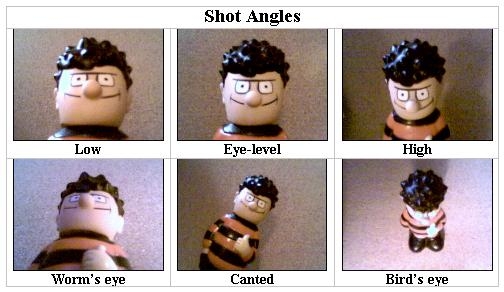 Shot sizes also provide different perspectives for the viewer and can be used to enhance techniques and the mood of the scene. (e.g. The 'extreme close up' shot can be used aid the technique, Suspense)
 The final way in which the camera can be used is through Camera and lens Movement. These camera movements also enhance the quality of the scene and again, can aid techniques etc.
 When used correctly the use of camera movements, shot sizes and shot angles can create effective scenes and create an overall more enjoyable experience for the audience.
Wednesday, January 16, 2013
Source Code (Thriller)


Monday, January 14, 2013
MacGuffin
The MacGuffin Technique, is a device or plot that is used to motivate the protagonist, or antagonist, creating a sense of purpose or to add to the story line to make the film more enjoyable for the viewers. It can help add to the tension and suspense of the film, creating a dilemma, or other effective situations. The MacGuffin usually takes the form of a goal or a desired object that the protagonist, or antagonist attempts to achieve; e.g. Glory, Power, Money etc.
The MacGuffin Technique, is commonly used in the thriller genre, and is the center-focus of the film, however the focus on the MacGuffin rapidly depletes throughout the story as the importance of the motivation for the characters plays out. The MacGuffin can return at the climax of the story, however it can also be completely eradicated.
The 'MacGuffin' was popularized by the director and producer, Alfred Hitchcock.
Suspense
Suspense is another technique that was popularized Alfred Hitchcock. Along with the MacGuffin technique, many producers use it within their films today. Suspense is the feeling of uncertainty and anxiety about an upcoming event within the film. This captivates the audience, putting them on the edge of the seat.
Subscribe to:
Posts (Atom)